Buying
Indoor vs outdoor neon signs: IP ratings explained
What IP44, IP65 and IP67 really mean, which spots need an outdoor sign, and how to keep the adapter dry when your neon lives outside.
Updated
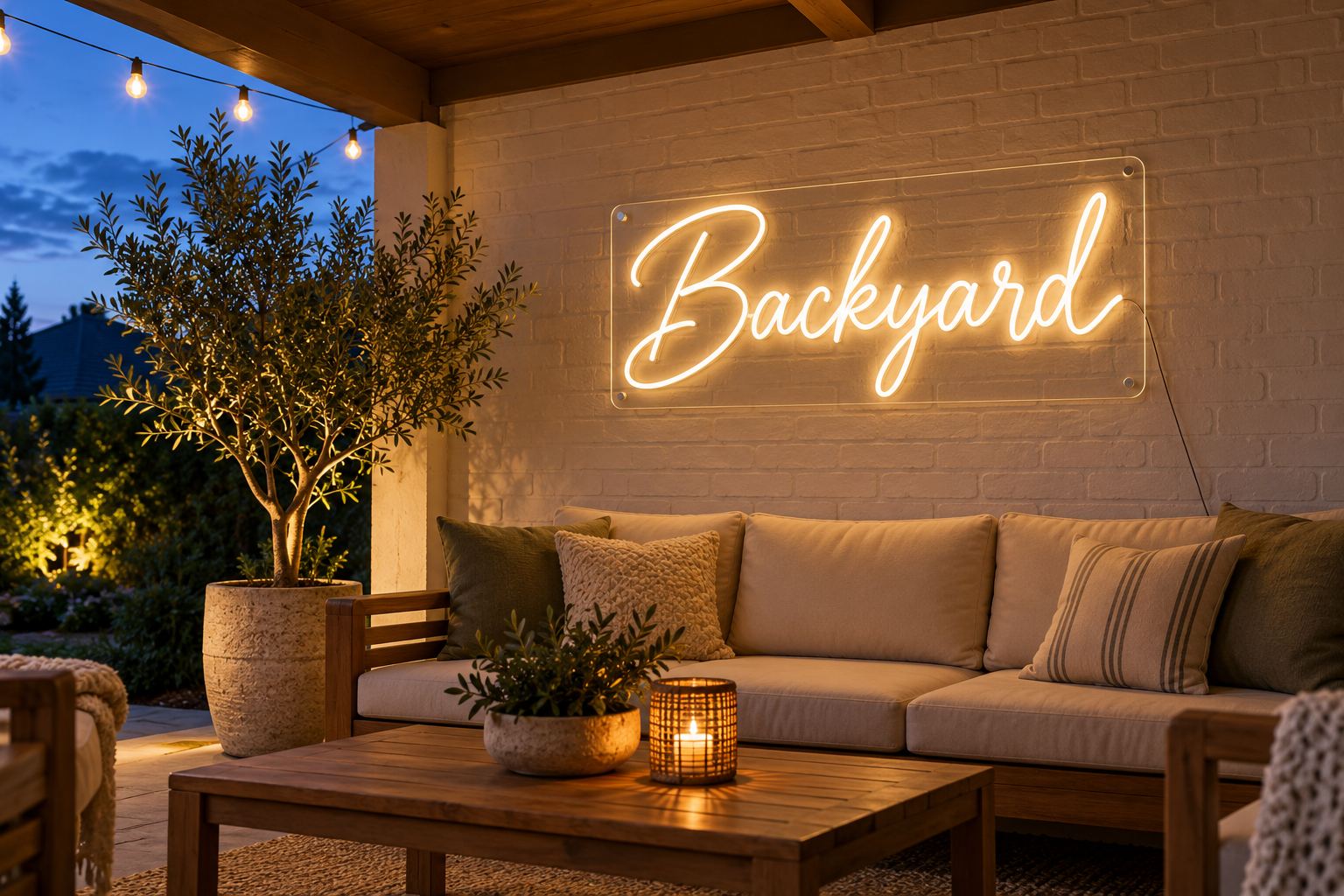
Most neon signs live indoors, where the only question is size and color. Once a sign goes out on a patio, a porch or a storefront, water and sun come into the picture. This guide explains what the IP numbers on lighting mean, how our outdoor build is made, and how to set it up so it lasts.
The short answer
- Inside a room, away from water: an indoor sign is all you need.
- Anywhere rain, splashes or steam can reach the sign: choose the outdoor build.
- Always: the plug-in adapter stays dry, whichever build you choose.
What IP ratings mean
IP stands for “ingress protection”. The code comes from an international standard (IEC 60529) and has two digits. The first is about solid things such as fingers and dust. The second is about water. A higher number means a harder test, but each number is its own test.
| Rating | Solids | Water | Where it makes sense |
|---|---|---|---|
| IP44 | Objects over 1 mm (about 0.04 in) | Splashing from any direction | Indoors, light splashes |
| IP65 | Dust-tight | Low-pressure water jets from any direction | Outdoors under rain |
| IP67 | Dust-tight | Short immersion, about 3 ft (1 m) deep for 30 minutes | Wet outdoor spots |
Two details trip people up:
- IP67 is not “more of” IP65. The immersion test and the water-jet test are separate. A product that passed both is marked with both, for example IP65/IP67.
- Immersion does not mean underwater use. The IP67 test is a half-hour dip. It does not make any sign suitable for a fountain, a pool or a spot where water pools around it.
When a seller quotes an IP number, it is fair to ask for the test report behind it.
Our outdoor build
Our outdoor signs are made the same way as our indoor signs: a flexible silicone LED neon tube pressed into a groove routed in a clear acrylic backboard. For the outdoor build, the tube and its connections are sealed and the sign is IP67 rated, with a test report.
You design it in the same neon designer as any other sign and pick the outdoor build as an option, or start from our custom outdoor neon sign. The outdoor build adds to the price of the width you choose. For scale, custom text signs run from $189.99 at 20 in wide up to $2,622.99 for a 120 in color-changing outdoor sign.
Ready-made designs can be built for outdoors too. The OPEN neon sign, for example, comes as indoor or outdoor.
Covered or exposed: where will the sign live?
Where the sign hangs matters as much as how it is built.
| Spot | Build | What to watch |
|---|---|---|
| Living room, bedroom, office | Indoor | Nothing special |
| Inside a shop window | Indoor | Condensation on cold mornings; choose outdoor if the glass often runs wet |
| Bathroom, pool house, near a sink or bar wash station | Outdoor | Steam and splashes; adapter well away from water |
| Covered patio, porch, under an awning | Outdoor | Wind-blown rain at the edges |
| Food truck or outdoor bar | Outdoor | Spray from cleaning, bumps |
| Open wall with no cover | Outdoor | Full sun and rain shorten its life; add a canopy if you can |
Our signs last longest under a roof or awning, out of direct all-day rain and sun. A covered spot also keeps leaves, bird mess and snow off the tube.
Sun, heat and cold
Sun. Heat is what ages LEDs. The hotter they run, the faster their light fades. A sign facing south on a dark wall in full summer sun gets much hotter than one in shade. Neon also looks faint in bright daylight, so a shaded spot helps it read better anyway.
Cold and snow. In winter, the things to watch are snow sitting on the sign and ice building up around cables. Brush snow off gently with a soft brush. Do not chip ice off the tube or the acrylic. The adapter belongs indoors in winter just as in summer.
Keeping the adapter dry
The sign runs on 12 V DC from a plug-in adapter that takes 100 to 240 V from the outlet. The adapter is made for dry places, even when the sign is an outdoor build. Plan its spot before you hang the sign.
- Keep the adapter indoors and bring only the low-voltage cable outside, or put it in a covered weatherproof outlet box.
- Use a GFCI-protected outlet for anything outdoors. Outdoor outlets in homes are normally required to have this protection.
- Use an “in-use” cover (the bubble type that closes over a plugged-in cord) if the outlet is exposed to rain. Under a roof, local code may accept a standard weatherproof cover. Your electrician or inspector will know which applies.
- Leave a drip loop. Let the cable dip below the plug before it rises to the outlet, so water runs off the low point instead of into the connection.
- Keep the adapter off the ground, where puddles and sprinklers reach.
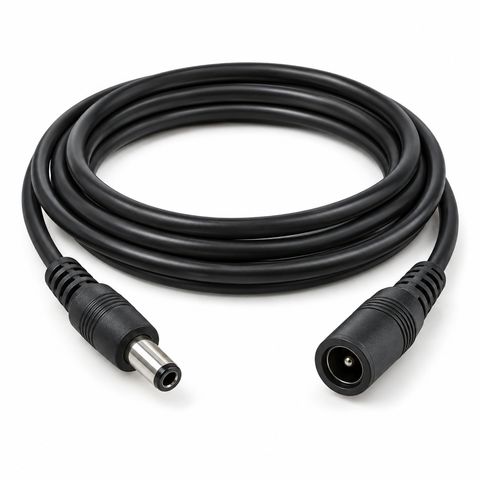
- Need more reach? Our DC extension cable comes in 6.5, 10 and 16 ft. It is for indoor use too, so keep it and its joints inside. Use one extension rather than chaining several; for longer runs, ask us first.
For outdoor events with no outlet, the battery box runs a sign for about 4 to 5 hours on a set of 8 AA batteries. Treat it like the adapter and keep it dry. We do not offer solar power.
Mounting a sign outdoors
Outdoor mounting is the same hardware as indoors, chosen for the surface:
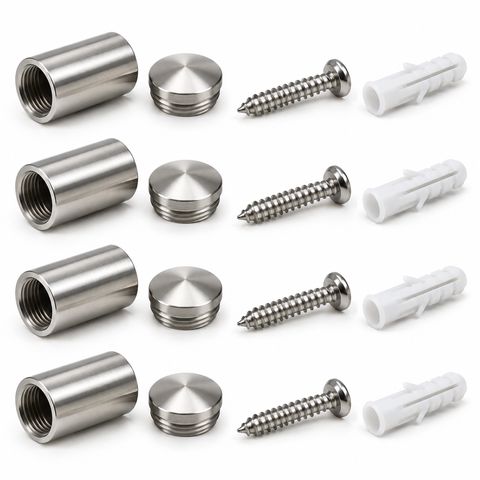
- Masonry, stucco or siding: our stainless steel standoffs float the sign about 1 in off the wall. Use anchors made for your wall material. Brick and block need a masonry bit.
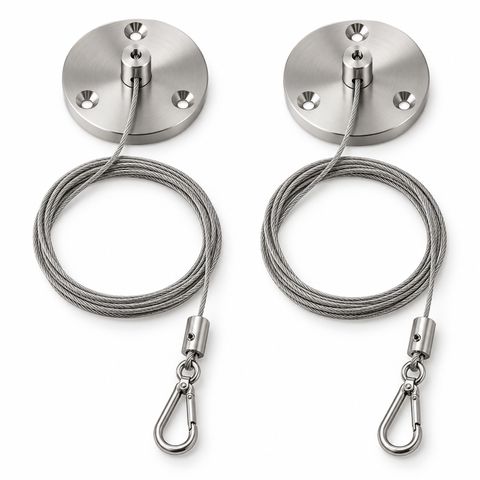
- Under a porch roof or pergola beam: hang the sign on ceiling hanging cables. Outdoors, use four cables rather than two so the sign does not swing in the wind.
- Adhesive mounts are not a good choice outside. They need a smooth, clean, dry surface, and weather works against all three.
Our step-by-step guide on how to hang a neon sign covers marking holes, anchors and cable routing. For storefronts, see OPEN signs and storefront neon, which also covers local sign permits.
Before you order
- Take a photo of the spot and note whether it is covered.
- Measure the wall and decide where the outlet is. The size guide helps with width.
- Tell us in the order notes if the sign will be outdoors, even if you picked the option. We check the outdoor details on your free design proof.
Nothing is made until you approve that proof. Standard production is 15 to 20 days after approval, plus 3 to 5 days in transit in the US. If you are unsure whether your spot counts as indoor or outdoor, send us a photo and we will tell you.

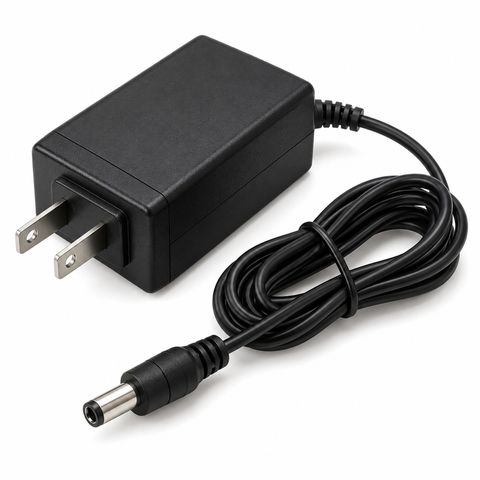 Replacement Power Adapter for LED Neon Signs
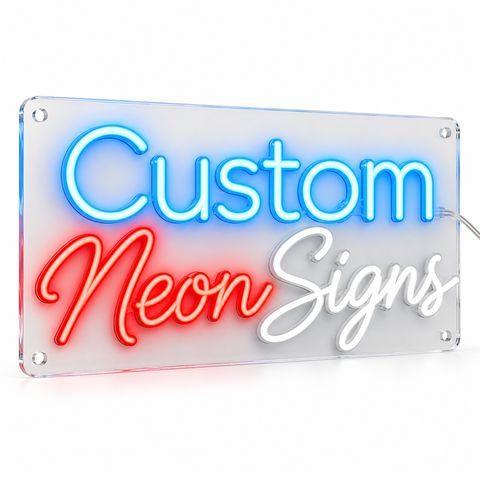 Custom LED Neon Sign
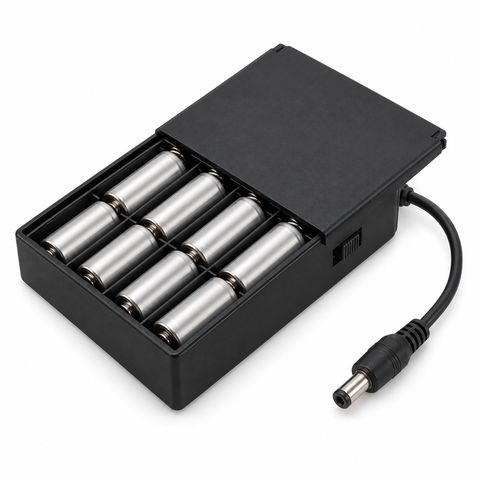 Battery Box for LED Neon Signs