Ideas
OPEN signs and storefront neon: size, placement, permits
How big an OPEN sign should be for your street, where to hang it in the window, timers, double-sided light boxes and local sign permits.
Updated

A lit OPEN sign answers the one question every passer-by has: can I come in right now? It works from across the street, after dark and in the rain. This guide covers how big it should be, where to hang it, how to run it on your hours, and what to check with your city before anything goes on the outside of the building.
Our OPEN sign
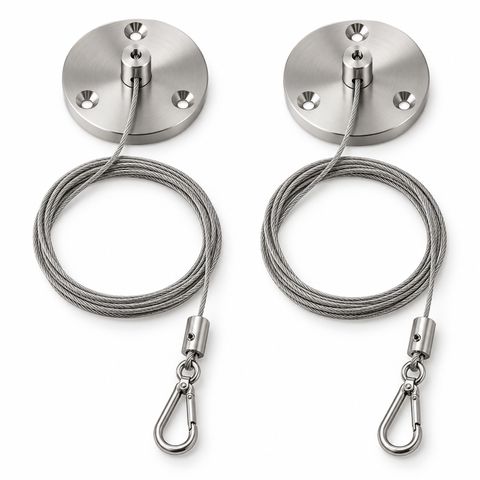
Our OPEN neon sign has OPEN in red block letters inside a blue rounded border. It is made to order in widths of 20, 24, 30, 36, 48 or 60 in, as a single-color sign as pictured or as a color-changing (RGB) sign, for indoors or outdoors. Like every LED sign we make, it comes with a dimmer, the plug-in adapter and the mounting kit you choose. For a window, that is usually our ceiling hanging cables.
Want other words, your business name or another color? Start in the neon designer or send us your logo. Colors other than the ones pictured can be requested on the proof at no charge.
How big should it be?
Size a storefront sign by how far away people will read it. A common rule of thumb in the sign trade is about 1 inch of letter height for every 10 ft of viewing distance. Treat it as a minimum, not a target.
| Reader distance | Letter height, at least |
|---|---|
| 10 ft | 1 in |
| 25 ft | 2.5 in |
| 50 ft | 5 in |
| 100 ft | 10 in |
| 150 ft | 15 in |
Go bigger than the table when:
- Readers are moving. Drivers have a second or two, not a minute.
- There is glare. Reflections on the glass and bright daylight both wash neon out.
- The sign competes with posters, displays or other lit signs in the window.
To find your distance, stand where your customers are: across the street, at the parking lot entrance, at the corner. Pace it out, about one long step per yard. Our size guide shows how width and letter height relate, and your free design proof shows the letter height of the size you pick before anything is made.
Where to hang it in the window
- Face it out. The lit side goes toward the street.
- Hang it on cables, a few inches back from the glass. That leaves room to clean the window and keeps the sign off glass that heats up in the afternoon sun.
- Put it at eye level for passers-by, above the window displays, not hidden behind blinds or products.
- Plan the outlet. The adapter needs an outlet near the window and should rest on a sill or shelf, not hang from its cord. If the outlet is far, one DC extension cable adds 6.5, 10 or 16 ft.
Our guide on how to hang a neon sign covers fixing the ceiling discs into a header or joist, step by step.
Hours, timers and color
- Use a timer. Set the dimmer to the brightness you want, then let a plug-in timer at the outlet switch the power on at opening time and off at closing. Test it for a day to make sure the sign comes back on by itself.
- Keep it steady. Some city codes allow window signs only with steady, non-flashing light, and some tie them to business hours. On an RGB sign, choose one fixed color rather than a cycling mode if your city limits moving or flashing light.
- Add your hours. A custom text sign can carry your hours under the name. Numbers must be big enough for tube; very small text is UV printed on the board instead, which reads well in daylight but does not glow.
On the building: double-sided light boxes
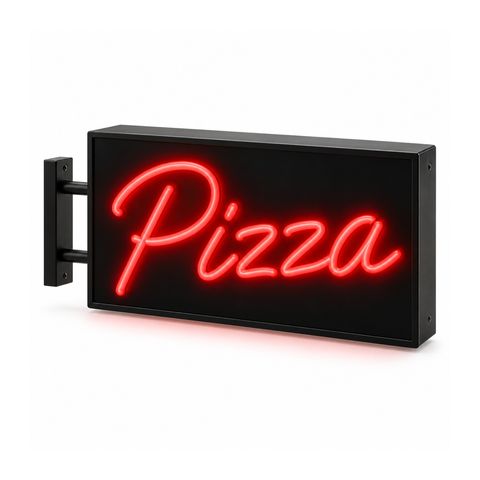
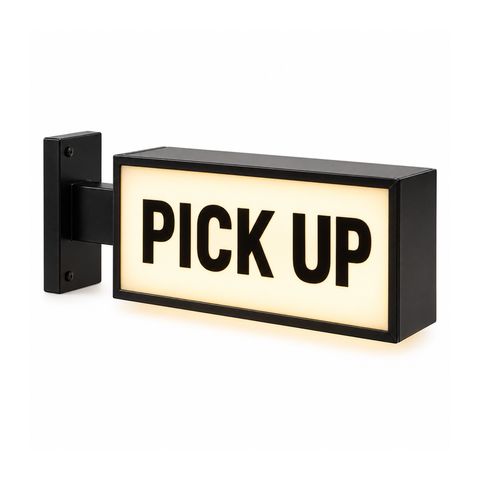
A sign flat in the window is read by people facing the shop. People walking along the sidewalk see your building side-on. A light box on a bracket that sticks out from the wall (a flag mount) can be read from both directions.
- Our custom double-sided neon light box is made to order in a rectangle, a circle or a custom shape, with your artwork on both faces. It is priced by quote with a free mockup.
- The PICK UP light box marks a pickup counter or a delivery-driver zone, and the ON AIR box suits studios. Both come 12 x 4 in or 24 x 8 in, plug-in or hardwired, from $214.95.
Our guide comparing a neon light box and a neon sign helps you choose between the two.
Permits: check your city first
Sign rules are set city by city, and they differ a lot. Speaking generally:
- Signs on the outside of a building usually need a sign permit, unless the code lists them as exempt. Hardwired signs may also need an electrical permit.
- Window signs inside the glass are often treated more lightly. Many cities let you put signs in a window without a permit up to a share of the glass area. That share varies widely, from about a tenth to a half of the window in the codes we looked at.
- Lighted signs can be treated differently from unlit ones. Some exemptions cover only non-illuminated window signs; others add conditions such as steady light or hours.
- Your lease may have its own sign rules, especially in a shopping center.
Before you order a sign for the outside of your building, call your city’s planning or permit office and tell them the size and where it will go. Your design proof shows the exact width and height, which is what they will ask for.
Outdoor build for signs outside the glass
A sign mounted outside, under an awning or on a food truck needs our outdoor build: IP67 rated, with a test report. Design it in the designer with the outdoor option, or start from the custom outdoor neon sign. Mount it under an awning if you can, and keep the adapter dry, indoors or in a covered weatherproof outlet box on a GFCI-protected outlet. Our guide to indoor and outdoor neon signs has the details.
Before you order
- Measure the window and the reading distance.
- Check where the outlet is.
- Ask your city about permits if anything goes outside.
- Decide on single color or RGB, and indoor or outdoor.
Production starts after you approve the proof: 15 to 20 days as standard, with Priority and Express rush options, plus 3 to 5 days in transit in the US. For more ideas, see our business neon signs and the storefront window project.

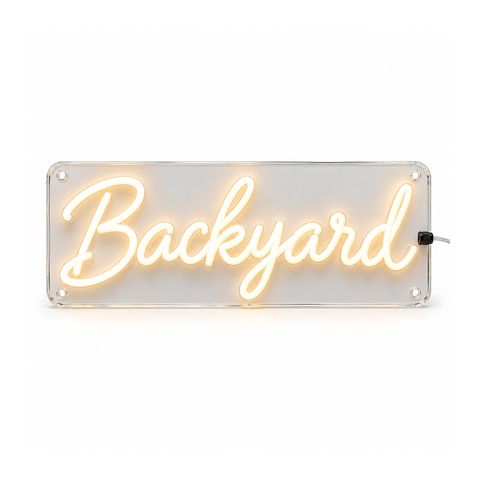
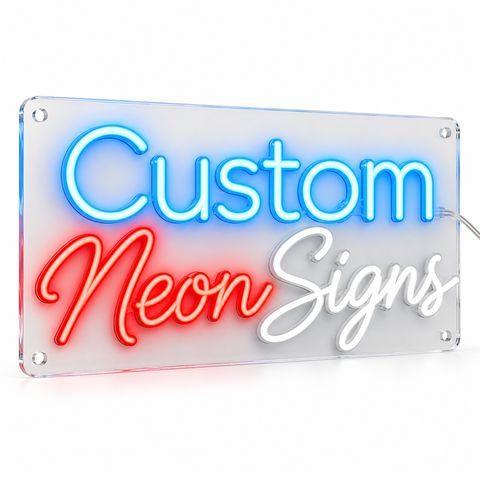 Custom LED Neon Sign
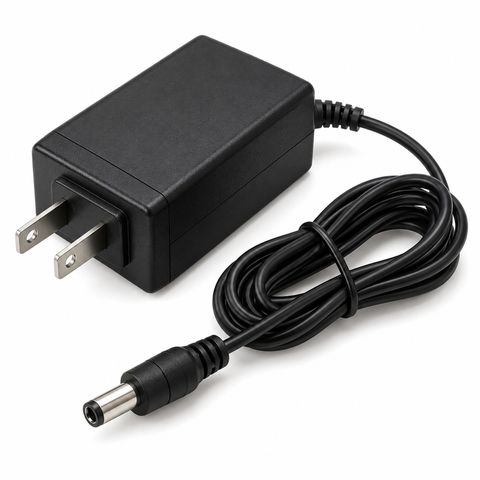 Replacement Power Adapter for LED Neon Signs
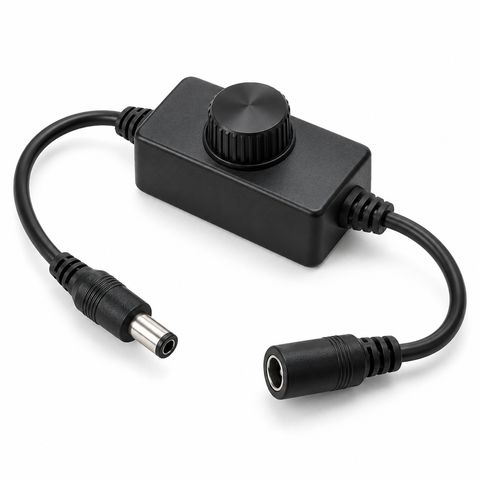 In-Line Dimmer Knob for 12 V LED Neon Signs