Power & safety
How much electricity does a neon sign use?
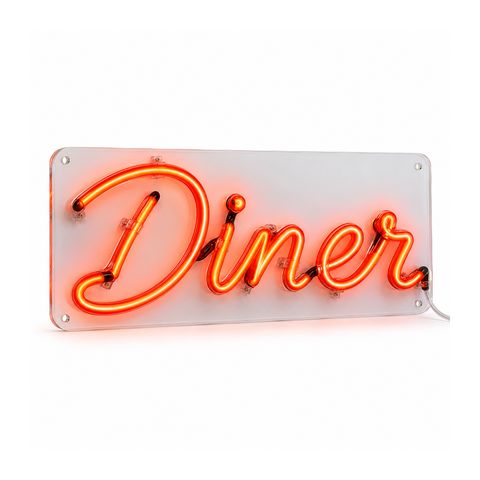
LED neon draws about 8 to 12 W per meter of tube. How to estimate your sign's watts, what it costs to run per hour and month, and how glass neon compares.
Updated

LED neon is one of the lighter loads in a home or shop. This guide shows how to estimate what your sign draws, what it costs to run per hour and per month, and how it compares with glass neon, so you can plan with real numbers instead of guesses.
The number to know: watts per meter of tube
Our LED neon tube draws about 8 to 12 W per meter of tube. That is about 2.4 to 3.7 W per foot.
The key word is tube. A sign’s power depends on how much tube is in it, not on how wide the sign is. Two 36 in signs can draw quite different amounts:
- A thin script uses one tube along the centre line of each letter, so it uses less tube.
- Bold block letters are outlined, with tube running around the edge of each stroke, so they use more.
- Several lines of text or a detailed logo add tube.
Step 1: estimate the tube length
You have two easy ways to get the tube length:
- Ask us. We draw every sign as tube paths for your proof, so we can tell you the tube length and the adapter size for your design.
- Estimate it yourself. Your proof shows the size of the sign. Print it or enlarge it on screen, measure each line of tube against that scale, add the lines up and convert to meters or feet. For outlined letters, count both sides of each stroke.
Step 2: turn tube length into watts
Multiply the tube length by 8 W and by 12 W per meter to get a range.
| Tube length | Approximate draw |
|---|---|
| 2 m (6.6 ft) | 16 to 24 W |
| 4 m (13 ft) | 32 to 48 W |
| 6 m (20 ft) | 48 to 72 W |
| 8 m (26 ft) | 64 to 96 W |
| 10 m (33 ft) | 80 to 120 W |
For comparison, an old-style incandescent bulb marked 60 W draws 60 W. A sign with 5 meters of tube draws about 40 to 60 W.
Step 3: work out the cost to run
The formula is the same for any electrical item:
watts ÷ 1,000 × hours × price per kWh = cost
Your price per kilowatt-hour (kWh) is on your electricity bill. In the example below we use 18 cents per kWh, close to the recent US average residential price. Prices vary a lot by state and by utility, so use your own.
Worked example
Say your sign has 5 meters (about 16 ft) of tube. At 8 to 12 W per meter, it draws 40 to 60 W.
- Per hour: 0.04 to 0.06 kWh × $0.18 = about 0.7 to 1.1 cents.
- Per month at 8 hours a day: 40 to 60 W × 8 hours × 30 days = 9.6 to 14.4 kWh, so about $1.73 to $2.59.
Here is the same sign at different daily hours, over a 30-day month:
| Hours on per day | Energy per month | Cost per month at 18 cents per kWh |
|---|---|---|
| 4 | 4.8 to 7.2 kWh | About $0.86 to $1.30 |
| 8 | 9.6 to 14.4 kWh | About $1.73 to $2.59 |
| 12 | 14.4 to 21.6 kWh | About $2.59 to $3.89 |
| 24 | 28.8 to 43.2 kWh | About $5.18 to $7.78 |
This is an example, not a quote for your sign. A smaller sign with less tube costs less, and a large outlined logo costs more.
A few small extras
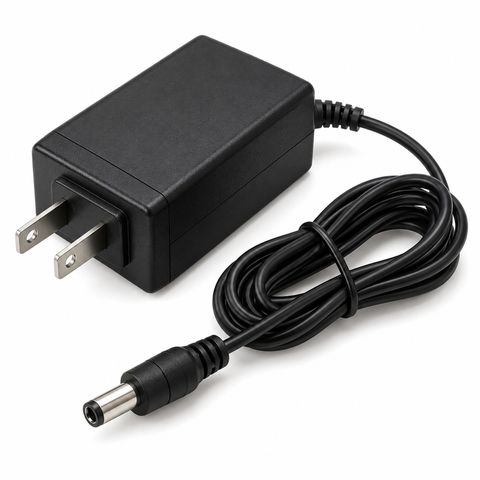
- The adapter uses a little power as it converts 100 to 240 V into 12 V, so the reading at the wall is slightly higher than the sign’s own draw.
- A remote dimmer’s receiver stays powered while the sign is off with the remote, so it can hear the next command. To cut all power, switch off at the outlet.
- The adapter label is a maximum. It shows the most the adapter can supply, not what the sign uses. Do not use it to work out running costs.
- Want an exact number? A plug-in energy meter between the outlet and the adapter shows the real draw.
How LED neon compares with glass neon
Real glass neon runs on a high-voltage transformer, and in most comparisons it draws more power than LED neon for the same length of tube. It also turns more of its power into heat, so the tubes can get hot to the touch. Published figures for glass neon vary widely with tube diameter, gas, color and transformer, so we do not quote a single number.
People still choose glass neon for its look, and we make it too. If running cost matters most, LED neon is the lighter choice. Our guide to LED neon vs glass neon compares the two in full, and you can see our glass neon signs and the custom glass neon sign.
Ways to use less
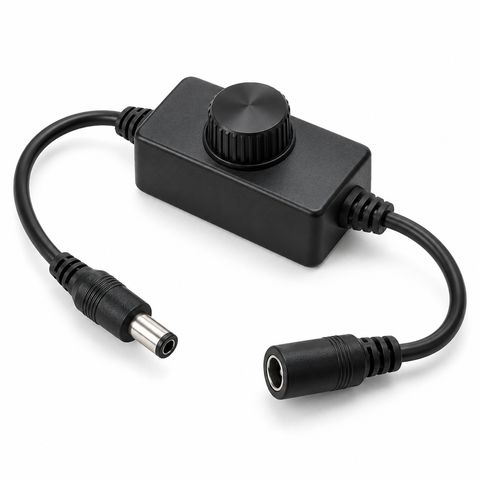
- Turn the dimmer down. A dimmed sign draws less, and most rooms do not need full brightness in the evening. Every LED sign comes with a dimmer, and a spare in-line dimmer is available. See neon sign dimmers and RGB.
- Use a timer or smart plug so the sign is only on when people can see it.
- Choose a thin font if you are designing a new sign. One line of tube per stroke uses less tube than outlined block letters. Our guide to the best fonts for neon signs explains the difference.
- Size the sign for the wall, not bigger. Our size guide helps.
Planning for a business
A shop window sign may run 10 or 12 hours a day, every day. Use the 12-hour row of the table, then swap in your own sign’s watts and your business electricity price, which is often different from home rates. For more ideas on signs for shops and restaurants, see neon signs for business.
Summary
- LED neon draws about 8 to 12 W per meter of tube, about 2.4 to 3.7 W per foot.
- Tube length, not sign width, decides the watts.
- A sign with 5 meters of tube draws about 40 to 60 W, roughly 1 cent an hour at 18 cents per kWh.
- Glass neon generally draws more for the same length of tube.
Ready to design? Start a custom neon sign, and ask us for the tube length on your free proof.