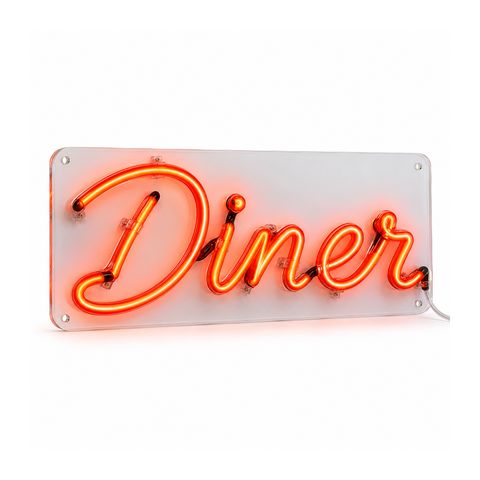
Care
Glass neon care and repair: what owners should know
How to handle and clean a glass neon sign, what a hum, buzz or flicker means, transformer and electrode faults, and what never to do around high voltage.
Updated
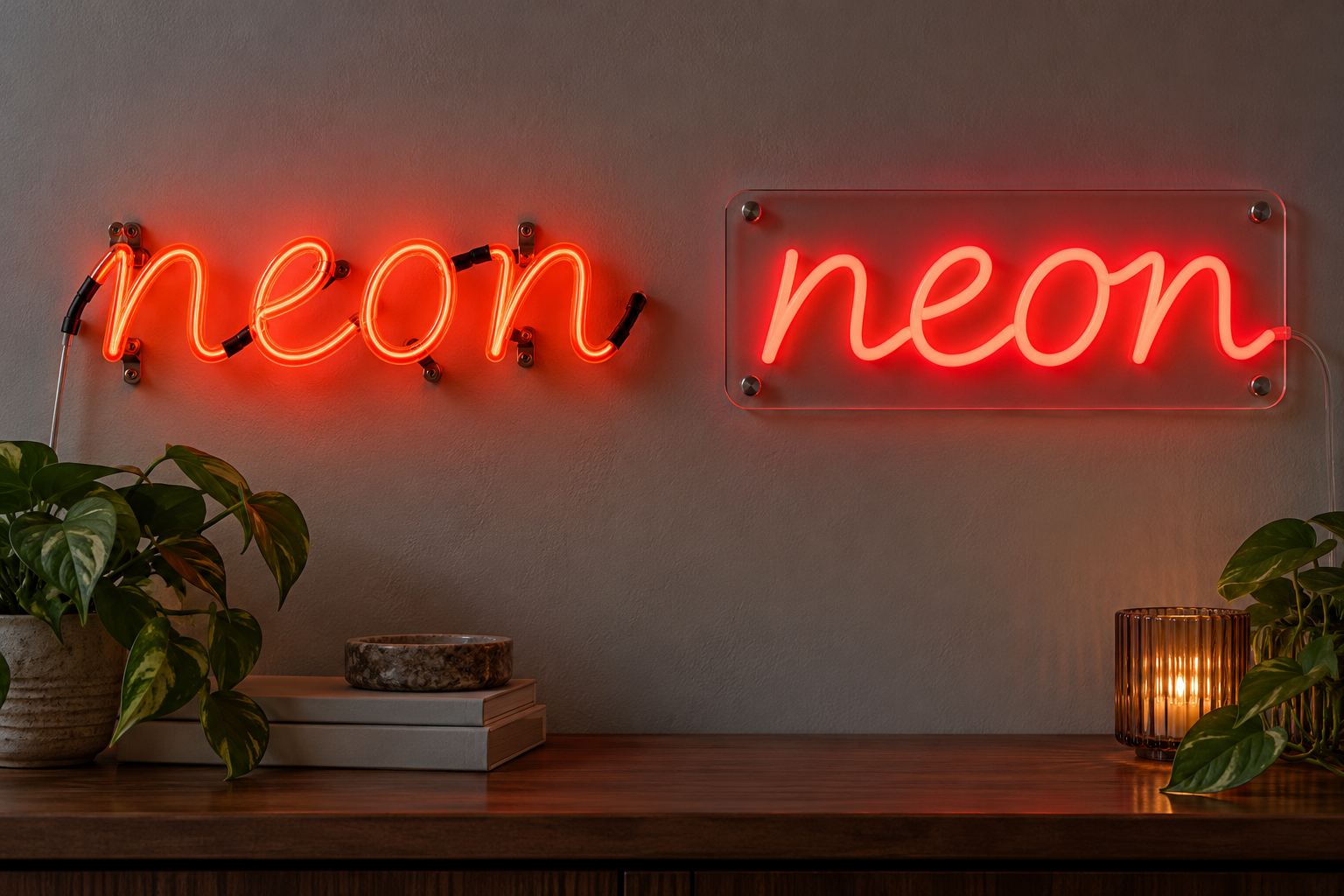
Real glass neon is a different object from LED neon. The light comes from gas glowing inside hand-bent glass tubes, driven by a high-voltage transformer. Looked after well, it lasts for many years, and when it does need work, it can almost always be repaired. This guide covers everyday care, what the sounds and flickers mean, and the few things you must never do.
How a glass neon sign works
Knowing the parts makes the rest of this guide easier to follow.
- The tube. Glass bent by hand over a flame to a full-size pattern. Ours are 6, 8 or 10 mm across as standard, 12 mm on request.
- The gas. Neon gas glows red-orange on its own. Many other colors, including blues, come from argon with a tiny drop of mercury, often in tubes coated inside with phosphor.
- The electrodes. Sealed into each end of a tube, where the current goes in. On our glass neon box signs they sit in black boots.
- The transformer. It turns wall power into the high voltage the tube needs, commonly somewhere between 1,000 and 15,000 V depending on the length and type of tube.
- The blackout. Where the tube jumps from one letter to the next, the glass is painted black so only the letters glow.
Handling
Glass neon is more fragile than LED neon, in shipping and on the wall.
- Lift by the frame or backboard, never by the tubes.
- Use two people for anything wider than your shoulders.
- Carry it upright, the way it hangs, and keep the backing from flexing.
- Keep it boxed until the moment you hang it.
- Hang it out of reach of passing elbows, chairs, bags and doors.
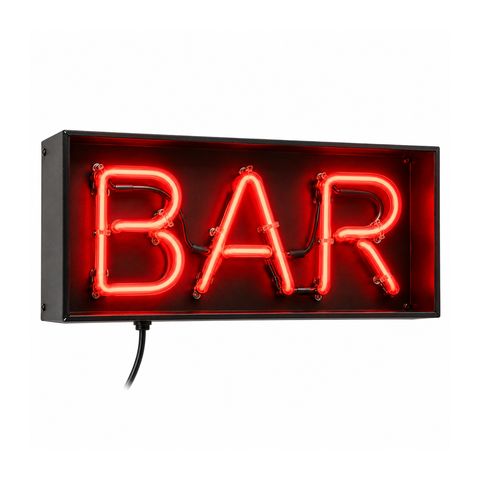
Our glass neon box sign puts the tubes inside an open-front black steel box, which protects the glass and hides the transformer. It is a good choice for a back bar or anywhere people pass close.
Cleaning glass tubes
Dust dulls a glass sign and builds up where tubes meet supports. A light clean every few weeks is enough.
- Unplug the sign and wait for the tubes to cool. Glass neon tubes run warm.
- Dust the tubes with a soft, dry brush, a feather duster or a dry microfiber cloth.
- For marks on the glass, use a cloth barely dampened with plain water. Wipe the glass only.
- Keep moisture away from electrodes, boots, wiring and the transformer.
- Never spray anything at the sign, and never clean it while it is plugged in.
- Clean the backboard separately. A clear acrylic board needs the same care as on an LED sign: mild soap, a microfiber cloth, and no glass cleaner, alcohol or solvents (see how to clean and care for a neon sign).
What is normal and what is not
| You notice | Normal? | What it usually means |
|---|---|---|
| A faint, steady hum | Yes | The transformer at work |
| Tubes warm to the touch | Yes | Normal running heat |
| A loud buzz or crackle | No | Tired or overloaded transformer, or current arcing to metal nearby |
| Flicker | No | Transformer, a loose connection or a worn electrode |
| One section dark, the rest lit | No | A cracked tube, a failed electrode, or the transformer feeding that section |
| Burning smell, scorch marks | No | Unplug at once and do not switch it back on |
Transformer and electrode faults
The glass tube itself rarely fails. When a glass neon sign needs repair after years of use, it is almost always the transformer or an electrode, and both can be repaired.
- Transformer. With age, or if it is asked to drive more tube than it should, a transformer can buzz, run hot, flicker or stop. A neon technician tests it and replaces it with one matched to the sign’s tubes. A transformer is not interchangeable with just any other; it must suit the tube length and type.
- Electrodes. They wear slowly over years of use. A failing electrode can cause flicker, darkening near the tube end or a section that will not light. A neon shop can replace it.
- Connections. The high-voltage connections between transformer and electrodes can work loose over time. These are also a job for a technician, not a screwdriver at home.
Glass neon dimming works differently from LED dimming. Our glass signs are made dimmable or non-dimmable when you order. The LED dimmers we sell are for 12 V LED signs and do not work on glass neon.
Never do this
Glass neon runs at high voltage. These rules are not optional.
- Never touch electrodes, boots, wiring or transformer terminals while the sign is plugged in.
- Never open the transformer or its housing.
- Never run a sign with a cracked or broken tube.
- Never spray water or cleaner on the sign, and never clean it while it is on.
- Never try to bend, glue or tape a tube.
- Never swap in a transformer from another sign without a technician checking it.
If a tube breaks
- Unplug the sign at the wall.
- Some tubes, including many blue and colored ones, contain a small amount of mercury. Open the windows and let the room air out for at least 15 minutes, and keep children and pets away.
- Wear gloves. Pick up the pieces with stiff card or paper, not a brush or a vacuum, and wipe up fine bits with damp paper towel or sticky tape.
- Seal everything in a jar or a sealed bag and take it to a household hazardous waste or lamp recycling drop-off, following your local rules.
The broken section can be remade by a glass bender. The rest of the sign is usually fine.
Getting a repair
- Within our 2-year warranty, contact us before anyone opens the sign. Send your order number and a short video of the problem with the sign lit.
- After the warranty, a local neon shop can test the transformer and electrodes. We are happy to tell you what was fitted to help them.
- Shipping a glass sign needs careful packing. Ask us before you send one anywhere.
Is glass or LED right for you?
Glass neon is usually chosen for its look: the light comes from the whole tube, not through a diffusing sleeve. Our custom glass neon signs are hand-bent to order, start from $479.99 and take about 4 weeks to make after you approve the free design proof. Fine detail and very thin strokes have limits in glass, and we tell you before production if part of a design needs simplifying.
If the sign will be handled often, travel to events or hang where children play, LED neon is the more practical choice: it runs on 12 V DC and the tube is flexible silicone. Our guide to LED neon versus glass neon compares the two, and you can browse both in glass neon signs or design an LED sign as a custom neon sign.